What our climate does to a slab
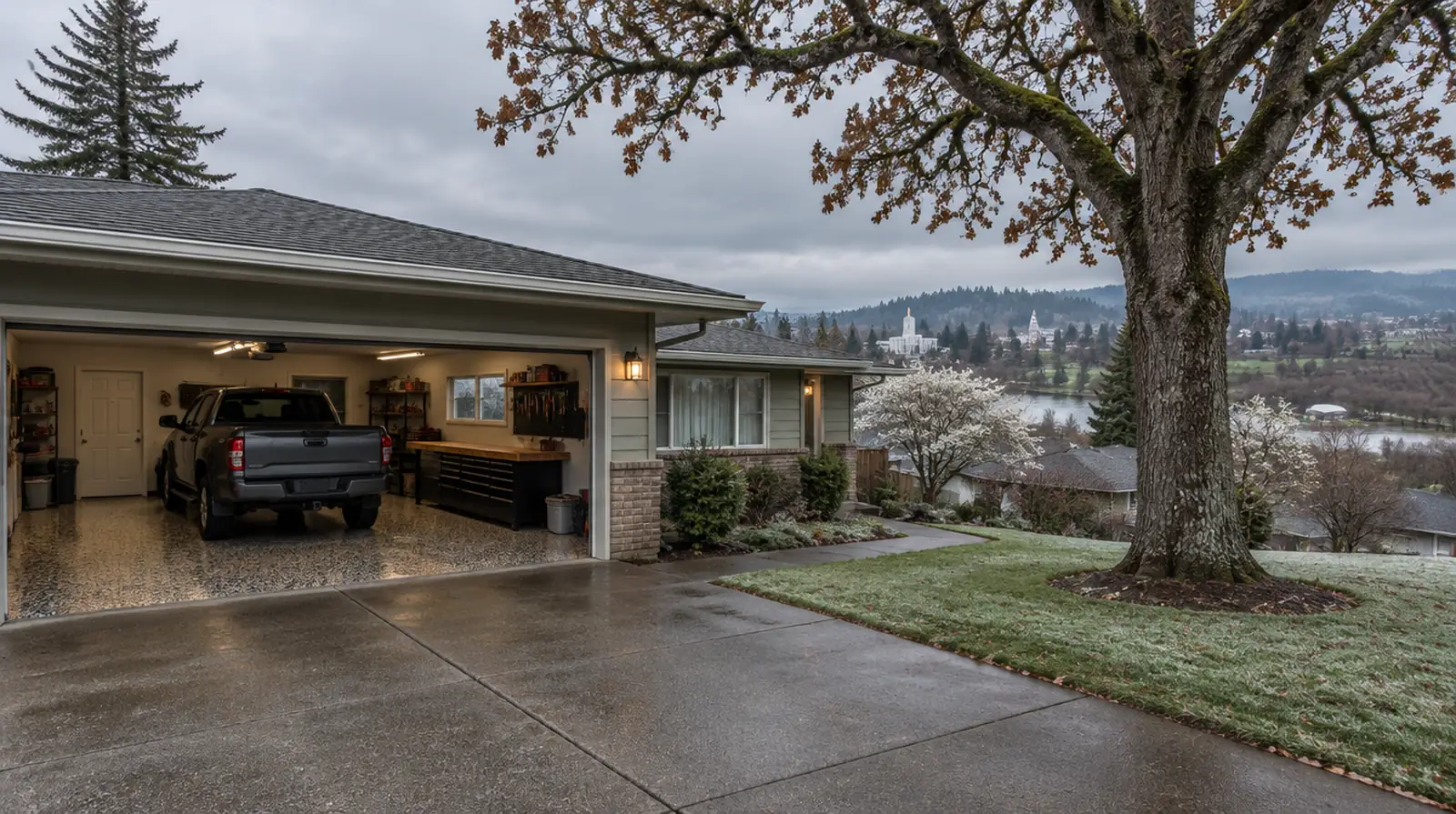
Most of the year's rain arrives between October and May, and it rarely falls hard. It just keeps falling. A garage floor in a valley winter almost never dries out. Cars bring in water and road grime several times a day, the slab stays cool and clammy, and the stains build layer by layer. Every few winters an ice storm or a hard freeze adds de-icer and gravel to the mix. Then summer arrives with dry heat, field dust and pollen that settles in every open pore. Bare concrete takes all of that in like a sponge.
A bonded resin floor changes the relationship. Water stays on top and pushes out with a squeegee. Oil and antifreeze wipe up instead of leaving a permanent shadow. Dust sweeps away. The surface reflects light, so a dim garage on a December afternoon feels noticeably brighter. And because the coating is tied into the concrete itself, it protects the slab from the slow surface wear that comes from years of wet tires and grit.
Prep is the whole job
We tell every customer the same thing: a coating is only as good as the surface under it. That is why we spend most of the first day on preparation. Our diamond grinders cut a clean profile into the concrete and pull the dust into HEPA vacuums, so the house and the neighbors stay clean. Cracks are opened and filled. Chipped joints and broken edges near the door are rebuilt. Old paint, builder sealer and failing kits are removed down to bare concrete. We also test moisture, because a lot of older slabs in town were poured without a vapor barrier and carry more water than you would guess from looking at them.
Only after all of that do we mix any resin. Skipping those steps is how floors end up peeling at the garage door after one winter, and that is the most common repair call we get.
What we install
- Garage floor epoxy for ranches, split-levels and new builds.
- Flake flooring with texture that hides dirt and adds grip.
- Metallic epoxy for basements, bars and showrooms.
- Polyaspartic coatings that cure quickly in cool weather.
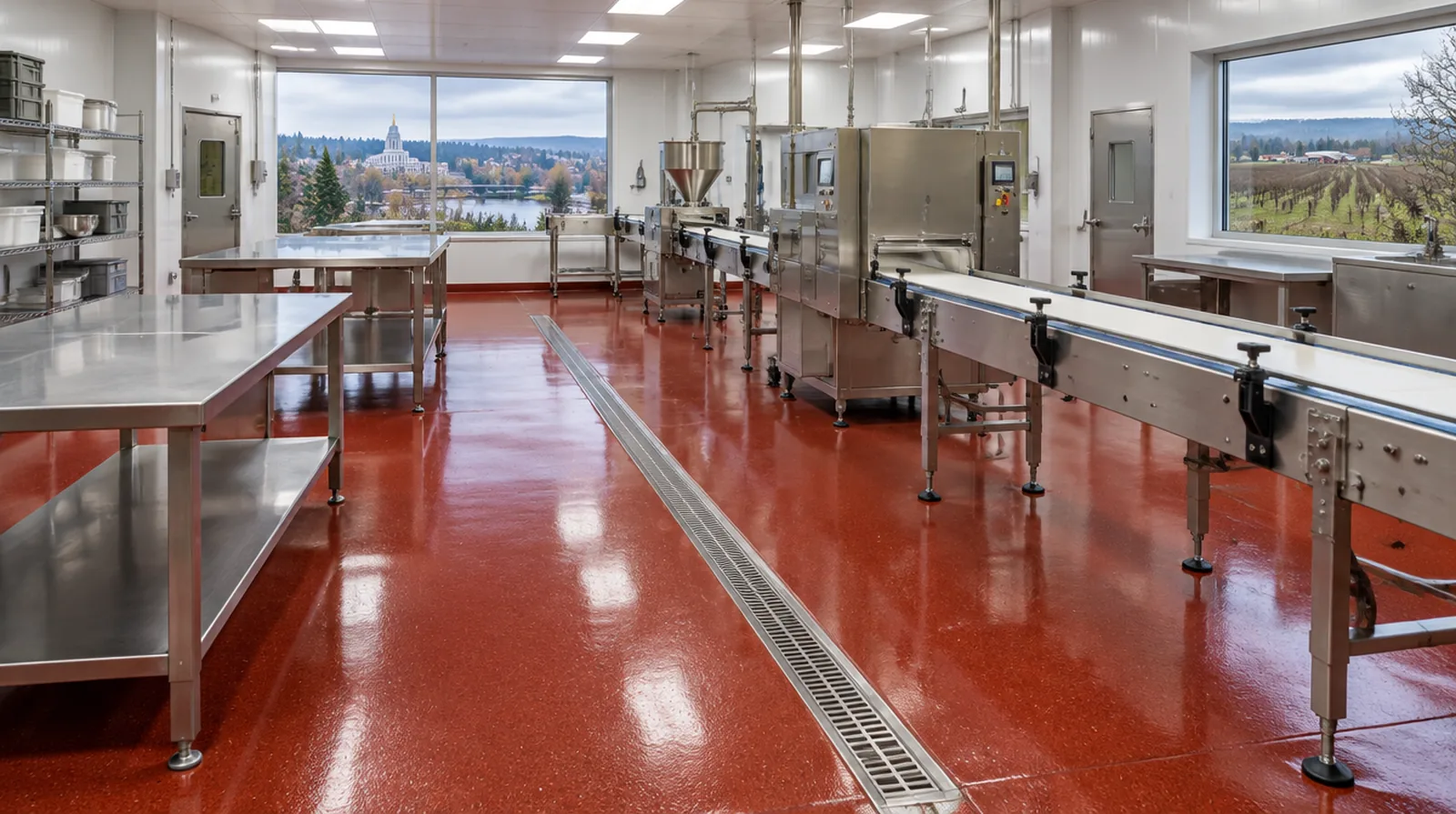
- Commercial epoxy for food plants, warehouses and agencies.
- Polished concrete for offices, lobbies and retail stores.
- Floor repair for peeling, worn or bubbled coatings.
- Concrete sealing for patios, walks and steps.
- Driveway coating with cleaning and crack repair.
- Epoxy countertops for kitchens, bars and work tables.
Homes across the capital
Salem has a little of everything when it comes to houses. Post-war and mid-century ranches with single-car or tandem garages fill many older neighborhoods. Split-levels from the sixties and seventies often have a garage half a level down, which means a slab that sits against damp soil on one side. Older two-story homes near downtown may have a detached garage or a basement with a tired concrete floor. Newer subdivisions in the south hills and on the west side of the river have big attached garages with smooth, tight concrete and a builder's clear sealer that must be ground off before anything will stick.
We adjust the system for each. A thirty-year-old slab with patches and oil soaked into it needs more grinding and repair. A new slab needs aggressive profiling. A garage that floods slightly at the threshold every winter may need a moisture-tolerant primer and attention to how water gets in. We explain those choices at the visit so the price makes sense.
Floors for the businesses that run the valley
Food processing, agriculture, distribution, auto repair, state and county offices, clinics and retail all keep the local economy moving, and each puts different demands on a floor. A cannery or produce packing room needs a seamless, slip-resistant floor that survives hot washdowns. A warehouse needs a hard, bright surface for forklifts and racking. A government office lobby needs something attractive and low-maintenance. We install quartz broadcast, urethane cement, high-build epoxy and polished concrete, and we schedule work at night, on weekends or in phases so your operation keeps running.
Our process
- Site visit. Measurements, moisture readings, crack and coating inspection, and a conversation about how you use the space.
- Written estimate. A clear recommendation with options and a schedule.
- Preparation. Diamond grinding, crack and joint repair, and cleanup.
- Installation. Primer, base coat, flake or decorative layers, and a tough clear topcoat.
- Walkthrough. We review the finished floor, cure times and care with you.
Most residential garages are finished in one or two days. Larger projects are scheduled after the visit.
Cold-weather installs
Resin chemistry does not like cold, wet air. When a garage sits in the forties, standard epoxy cures slowly and can blush, leaving a cloudy, greasy film. We measure slab temperature and dew point before we start, use heaters when needed and switch to fast-curing polyaspartic topcoats in the cooler months. That lets us coat garages year-round without cutting corners.
Popular color choices
Gray and white blends brighten dark garages and hide the gray road film that wet tires carry in. Tan, brown and black mixes are favorites for shops and garages that see farm dust and mud. Blues and charcoals work well in basements and home gyms. We bring physical samples to every visit, because flake color looks very different under a fluorescent shop light than it does on a phone screen.
Let us see your floor
Call us or use the form to send photos and rough dimensions. We will schedule a visit, test the concrete and give you a written estimate. You can also read about our crew or head to the contact page.
Get a free written estimate
Call (503) 877-1052 for a free estimate.